
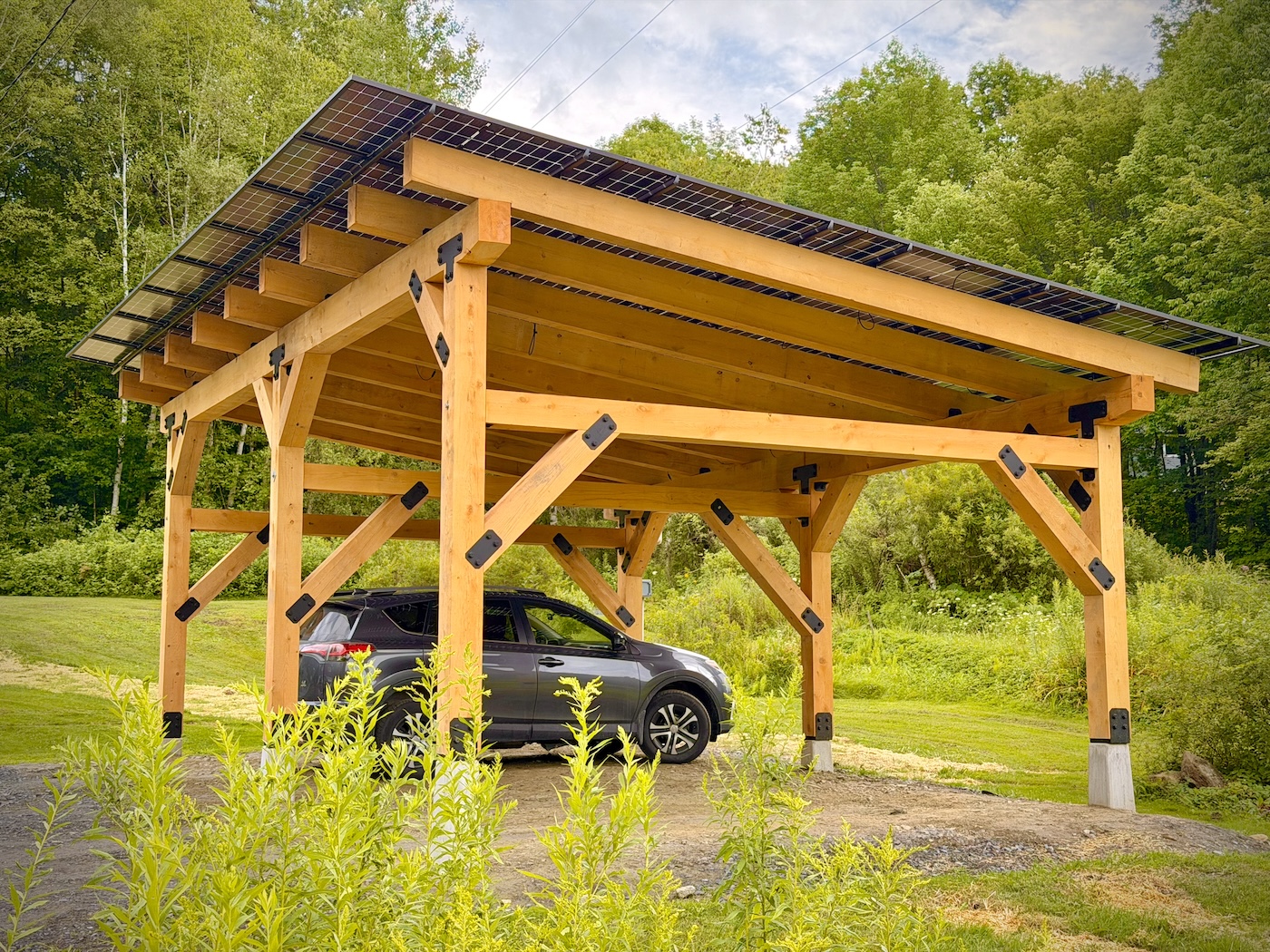
A few weeks ago I was watching the full eclipse start on the island of Mallorca, Spain. Days earlier I’d been standing under another finished solar carport – big timbers overhead, afternoon light coming down softly through the panels.
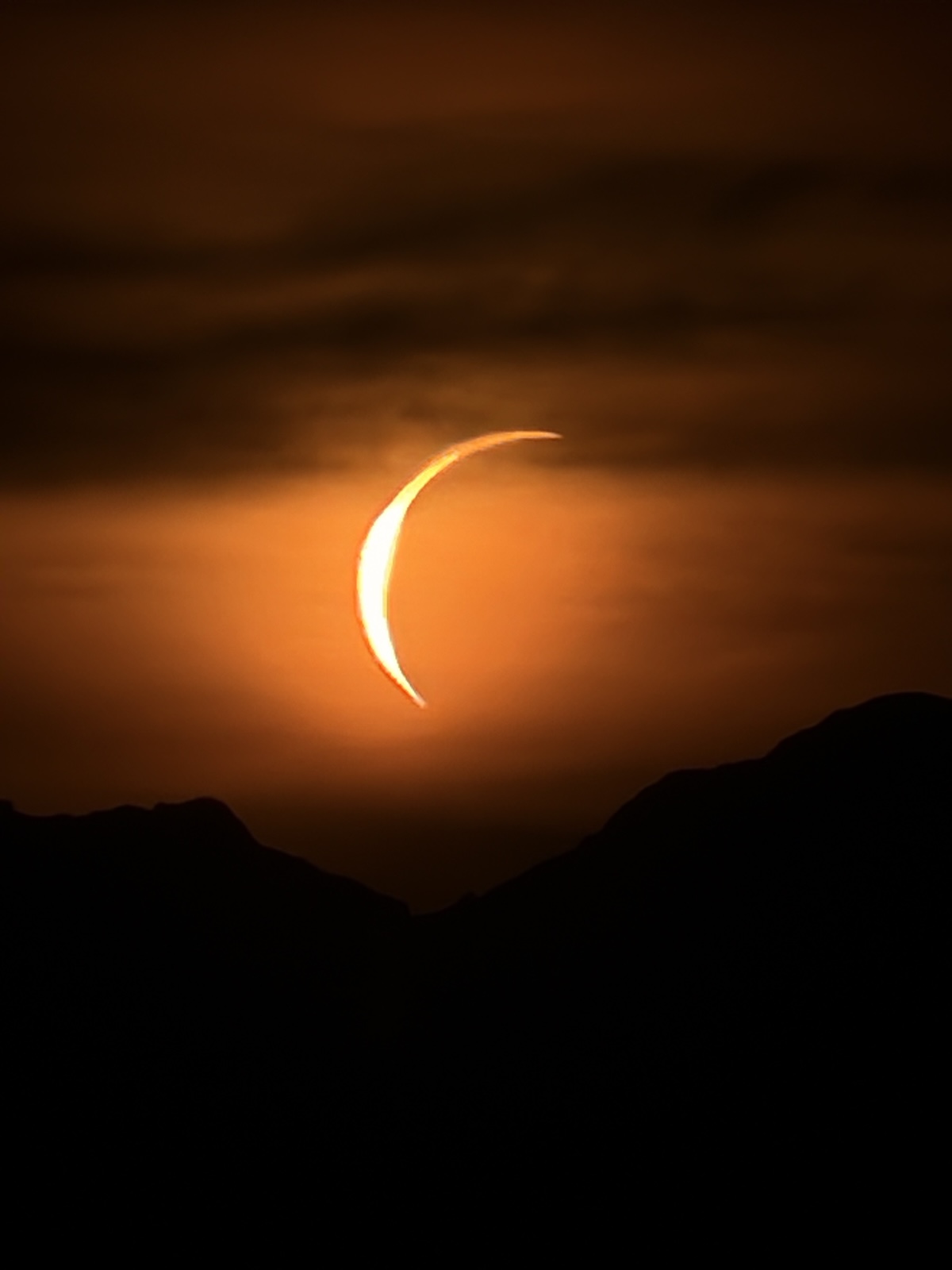
The same sun eclipsing before me was now powering that house, 3800 miles away. It is the most predictable object in our lives.
Suddenly I felt a surge of plain, uncomplicated optimism.
This feeling – that perhaps our best years are ahead of us, not behind – feels almost taboo in an era so defined by bad news. Yet this future is close enough that its technological building blocks already exist and imagining it requires no sci-fi glossary.
Let me show you a morning. I'll set it in 2050, and I'll put you in it, because I would like you to be there.
Waking up
You wake with the sun.
The house is warm, and keeping that warmth all night cost you nothing. The energy arrived in the form of sunlight the afternoon before, sat in a battery on the wall, and spent itself slowly through the dark.
Breakfast goes on an induction burner pulling from the same reserve. In the yard outside, an autonomous electric mower trims the grass and will dock itself to recharge after an hour.
A timber-frame solar carport stands in the driveway, turned a handsome gray with age. The electric car is at almost 300,000 miles on its original battery. You don't remember what it's like to get an oil change or regular maintenance.
The panels over the driveway and the smaller solar sheds out back went up twenty years ago, and they have decades of life in them still. Every bit of sunlight that lands on this property is yours, and you decide what it becomes: heat, cold, a hot shower, a full car, the everyday machinery of an easier day, spare power you can sell to the grid or to a neighbor.
That's the whole thing, really: a different relationship with the light that was falling on your property anyway.
The best investment we ever made
In the fifteen years after 2010, the price of electricity from a solar farm fell by about 90%.
Batteries fell by 90%, too.
You can't think of another product that has done that – gotten ten times cheaper in a decade and then kept going. By the time you built your solar carport, new solar and wind were already the cheapest electricity most places on Earth had ever built, cheaper than the coal and gas we'd been forced to buy month-after-month for over a century.
The utilities did not switch to renewables because we asked nicely, or because of the fires and the floods that devastated the world year after year. They switched because their own accountants ran out of ways to make the old fuels pencil out. When the clean thing is also the cheap thing, you don't need to win an argument.
A solar groundswell
Here's the part you love most: the change didn't come down from the top.
It welled up from the bottom – from families and shops and farms putting rooftop solar and solar canopies on their own properties, one at a time, until so many people were making their own power that the old setup simply gave way. Energy stopped being something you rent from a company at the end of a wire and became something you make, store, and share with the people around you. The grid is still there. It's just more of a backup now instead of a landlord.
That shift is why the storms of the 2040s land softer than the ones I remember. When power is spread across ten thousand rooftops instead of one big plant, there's no single wire whose failure puts everyone in the dark. Houses carry their own reserves. Panels have gotten cheap and standard enough that a busted one is a same-day fix, not a lost season. Resilience turned out to be less about building a stronger fortress and more about not keeping all your eggs in one utility's basket.
The parts you didn't see coming
The hard part is that the world did warm. It pushed up toward 2ºC above the pre-industrial mean, and the weather got meaner on the way.
Yet the solar revolution also included some lovely secondary effects.
Start with war. For most of the last century, oil sat close to the center of it. The political scientist Jeff Colgan, who spent years studying this, estimates that oil was tangled up in somewhere between a quarter and a half of all wars between nations since 1973 – through the ambitions of petro-states, the scramble over shipping lanes, the way a country sitting on a lot of oil tends to attract armed intervention. Sunlight won't end war; people are endlessly inventive about finding reasons to fight. But sunlight cannot be hoarded. It can belong to no cartel. Spread solar and wind and batteries across the poorer half of the world, let more nations make at home what they used to buy or seize abroad, and you take one very old accelerant off the fire. That is not nothing.
Then there's the carbon we'd already emitted, which is finally starting to come back down. In the 2020s, we pictured giant machines vacuuming the sky. Those exist, but what's actually doing a lot of the work is dirt. Farmers, mostly. Instead of paying every year for fertilizer and pesticide made from fossil fuels – most synthetic fertilizer still starts as natural gas – a lot of them started tilling less, supplementing their fields with amendments from seaweed, and grazing and planting so that living roots hold more carbon in the ground instead of breathing it out. The science is still working out how much carbon soil can hold, and for how long – but it's cheap, it pays the farmer to do it, and that's the kind of fix that tends to stick.
None of this is waiting for 2050
Here's what stays with me, back under that solar carport in the present tense: almost everything in the morning I described exists.
Panels. Batteries. Heat pumps. Induction. EVs. Falling prices.
The sunlight is already falling on your roof, your driveway, your back field. It is free, every day, whether or not you catch it. A Sunshed in the yard or a Sunport solar canopy over the driveway is simply a way to start keeping it.
The future I want to live in won't arrive all at once, handed down from on high. It gets built the way everything worth having gets built: one frame at a time, by people who decided the best years were still ahead.
The sun's going to come up tomorrow either way.
To 2050 and beyond,
Kyle