
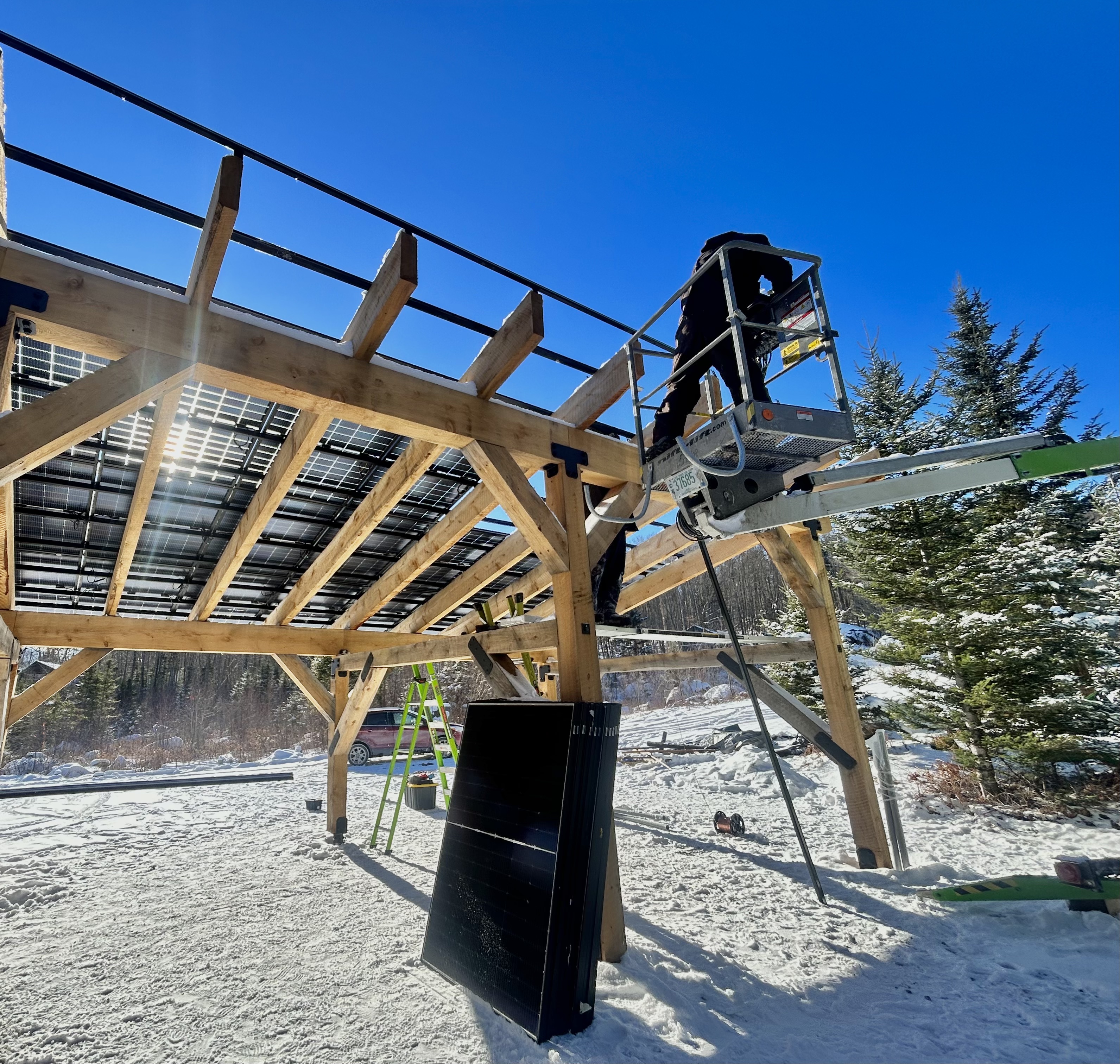
The 30% federal tax credit for residential solar expired on December 31, 2025 (IRS). For more than a decade, this credit subsidized all types of solar installations, from rooftops to solar carports. If you've been weighing solar in 2026, the math has shifted under your feet.
It's a fair moment to step back and ask the obvious question: does solar still make financial sense?
The solar tax credit isn't the whole story
Solar prices had been roughly flat in real terms since 2018 (NREL), and now the tax credit's expiration has made solar about 30% more expensive this year compared to last year. But the cost of installing solar is only half the story. The other side of the ledger – the cost of grid electricity – is just as important.
For context, US residential electricity prices climbed about 33% in nominal terms between 2019 and 2025, but in inflation-adjusted dollars they tracked overall inflation closely (EIA). The next decade is when that pattern is projected to break.
Why the forecast for electricity prices is what matters
In January 2026, federal forecasters announced that the next four years are projected to bring the strongest growth in U.S. electricity demand since 2000 (EIA). The named cause is AI data centers, which consumed about 4.4% of all U.S. electricity in 2023 and could be using as much as 12% by 2028 (LBNL).
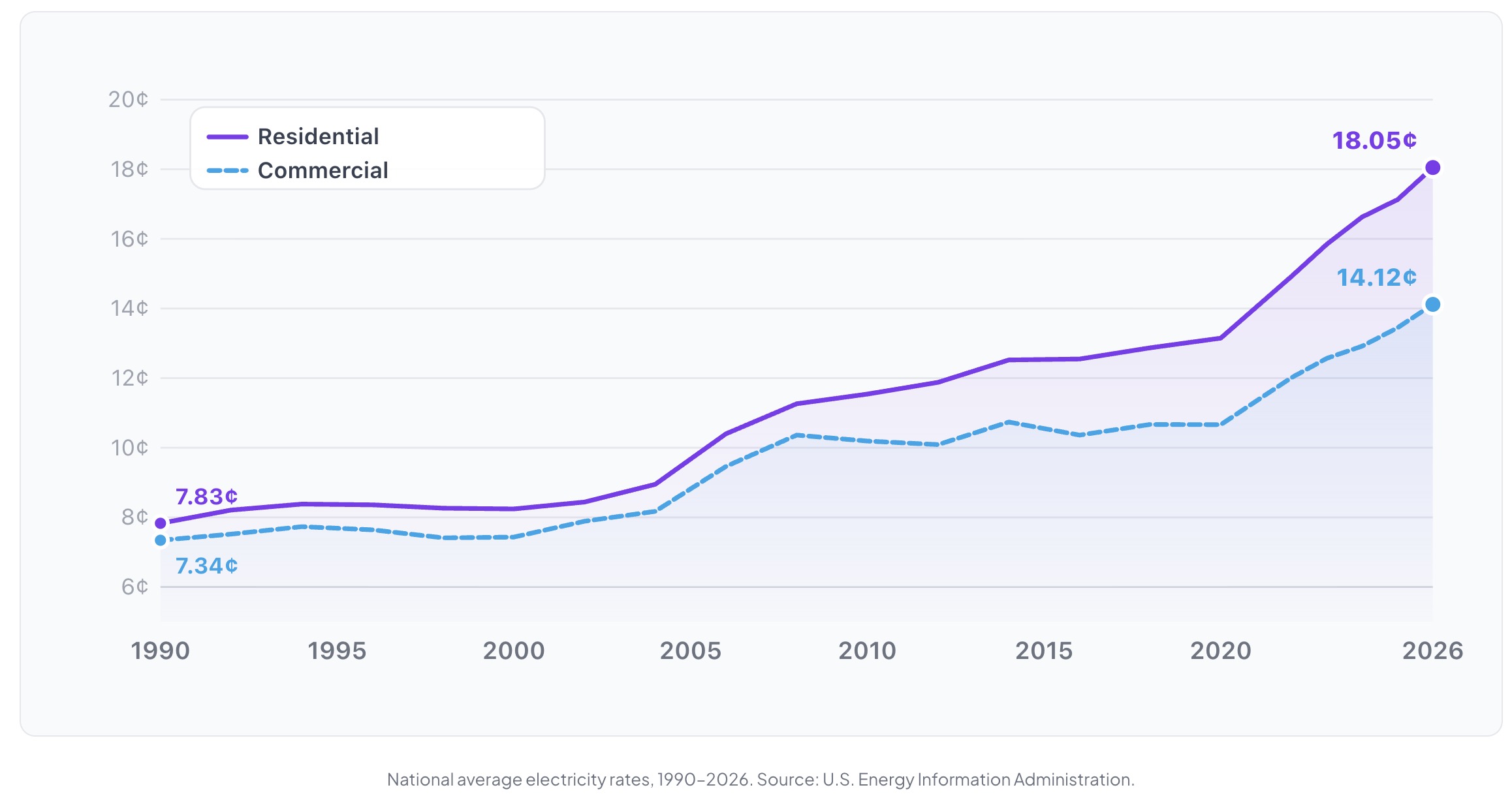
Utilities are already responding. Requests by utilities to increase customer charges reached $18 billion in 2025 – the highest level since the mid-1980s (LBNL).
Goldman Sachs analysts forecast consumer electricity inflation of about 6% annually through 2027. This is well above expected general inflation, and data center demand is cited as a key driver (Goldman Sachs).
The cost of waiting
Picture yourself opening your electricity bill nine years from now, in 2035. The grid story we just walked through has continued to play out, with your bill climbing every year since 2026.
A neighbor of yours installed a solar carport in 2026. Their electric bill has been close to zero ever since, it's close to paying itself off even without the tax credit, and it will be powering their life for decades to come. You're stuck with ever-increasing prices, and the gap is growing with every rate increase.
The cost of waiting isn't the equipment getting cheaper. It's letting electricity prices continue to consume more of your income.
A different way to think about solar
A good way to think about solar is that you're buying 30+ years of electricity at a price you fix today. The more rates are predicted to rise, the better that investment looks.
Today's panels lose less than half a percent of their power per year – their 25-year warranties are a floor, not a ceiling (NREL). Well-built systems are producing into their thirties and beyond.
When the math pencils out, the next question is what to buy
Solar still pencils out without the tax credit, because the bigger lever is the cost of electricity, and it's pointing the wrong way for grid-tied households. The question is no longer "is solar a good investment?" – it's "what kind of solar?"
That's the subject of our follow-up post: when hardware costs flatten, the value moves to design.
Sources
- EIA – Electric Power Monthly
- EIA – Strongest 4-year electricity demand growth since 2000
- EIA – Retail electricity prices tracked inflation over the last 10 years
- EnergySage – Residential solar marketplace cost data
- Goldman Sachs – Consumer electricity inflation forecast
- IRS – Residential Clean Energy Credit
- LBNL – Retail Electricity Price and Cost Trends 2026
- LBNL – 2024 Data Center Energy Usage Report
- NREL – PV Module Reliability
- NREL – U.S. Solar PV System Cost Benchmark