
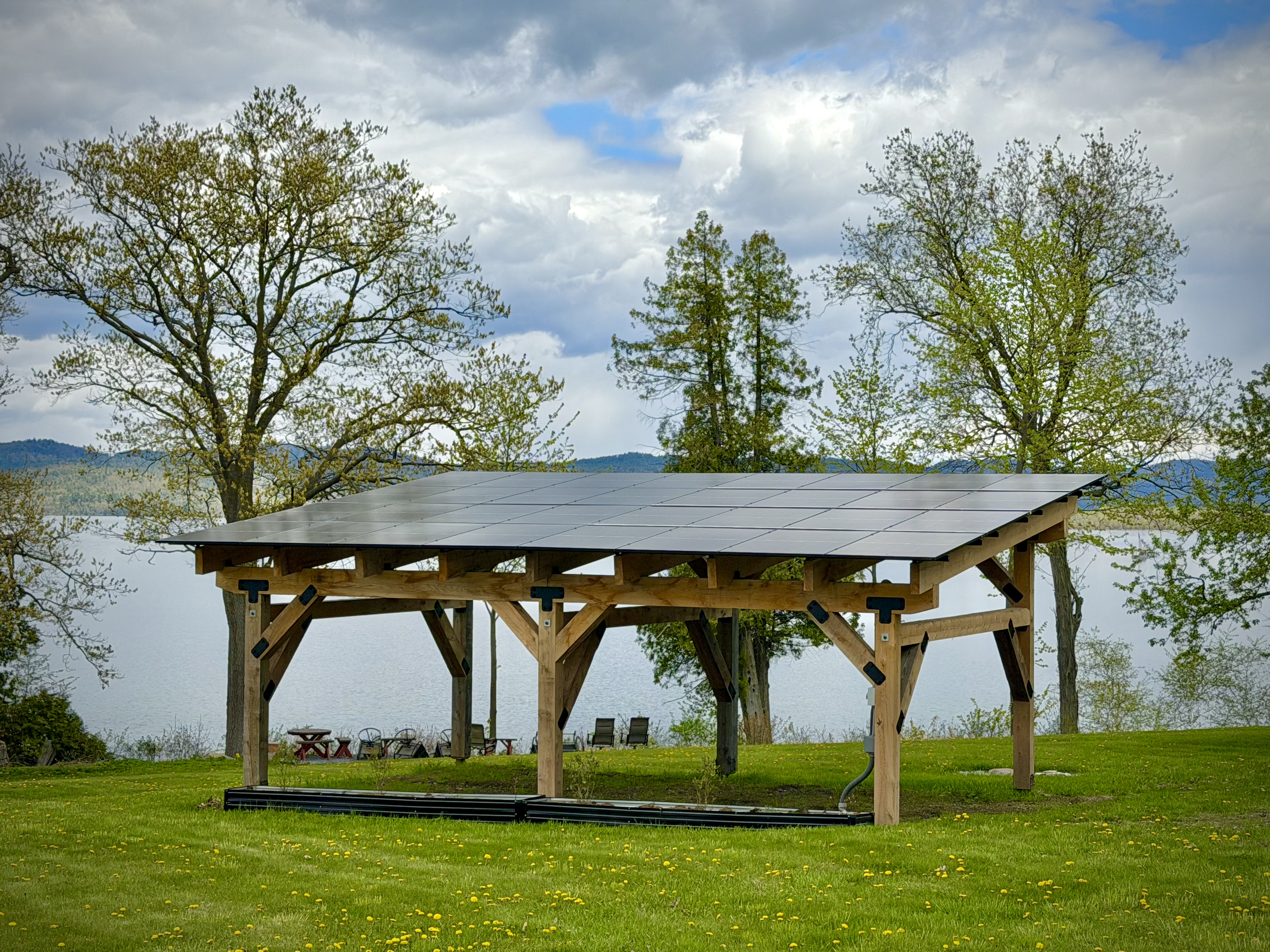
Solar is a miracle in plain sight: a product that captures free energy falling out of the sky, with no moving parts, a 30+ year lifespan, and almost zero maintenance.
Still, plenty of myths surround solar panels. Some stem from honest curiosity, and others get passed around until they sound like common knowledge.
We build timber solar carports all over the country, so we hear the same handful again and again. Most concerns start from something real: glass can break, panels do age, no panel converts every last photon of light. But an unanswered doubt can quickly balloon to project paralysis, so we're here to address the most common solar myths.
"Panels are only 20% efficient"
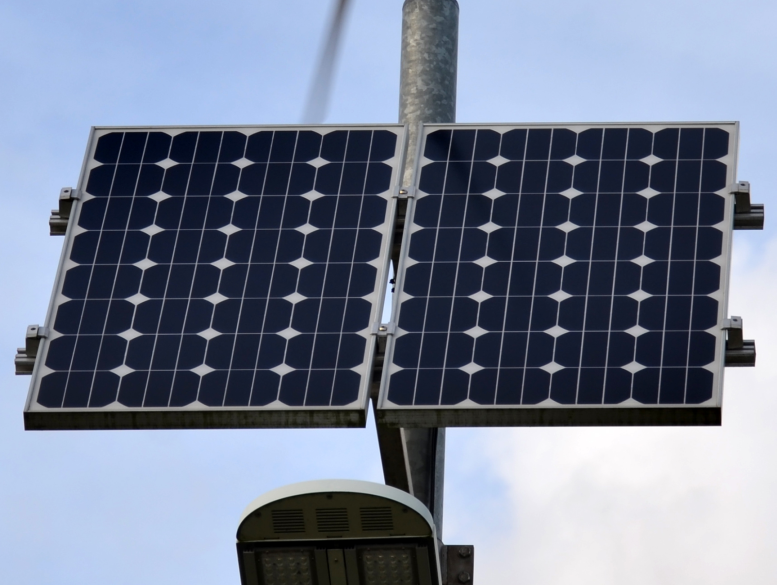
You may see a panel's efficiency quoted at around a fifth and hear it as bad news. If you're paying for 10 kilowatts of solar, does that mean you're only getting 2 kilowatts?
No – efficiency is not a haircut on the power you paid for. The Department of Energy defines it plainly: the share of the sunlight landing on a panel that comes back out as electricity.
A 400-watt panel makes its 400 watts in full sun, full stop. What you buy, and what you get, is the rated capacity – so the useful question was never the efficiency number, it is how many kilowatts you want overhead. On a solar carport, where the roof itself is the array, the kilowatts are the number that matters.
"Solar panels shatter"
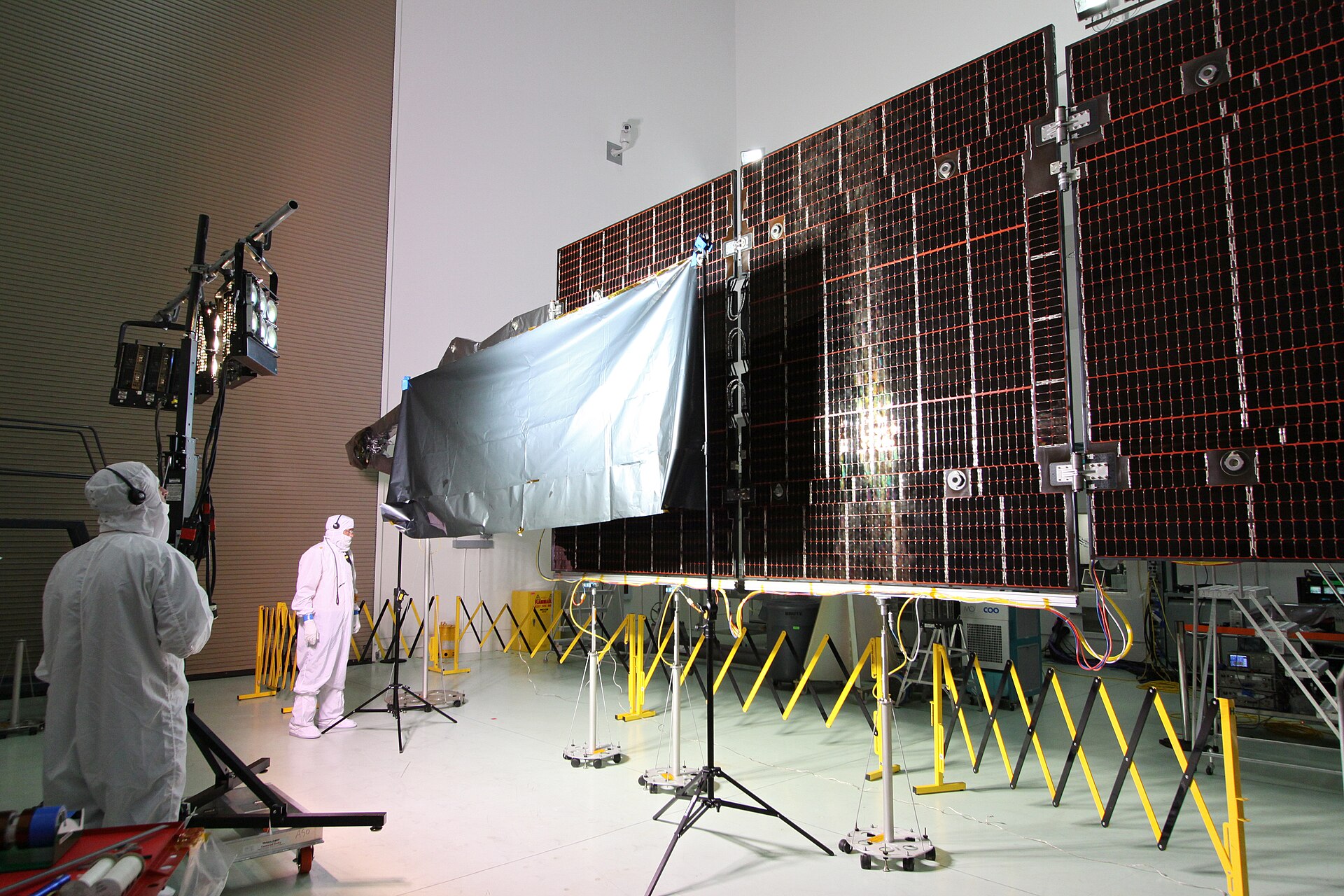
The face of a solar panel is tempered glass, and no panel reaches the market without surviving a standard hail test: a lab fires ice balls the size of ping-pong balls at it at roughly 70 miles an hour.
The real world backs up the lab. When a severe hailstorm hit the National Renewable Energy Laboratory's Colorado campus in 2017, only one of more than 3,000 panels broke – and that one had taken three dozen hits in nearly the same spot. The Department of Energy's own read is that panels survive the large majority of hail events they meet. You might expect the sheet of glass on the roof to be the fragile part of the system, but it is closer to the toughest.
Our Sunports are engineered for up to 95 pounds of snow per square foot and 120-mile-per-hour wind, and the glass on top is rated to handle the most severe weather.
"Panels leach toxins into the soil"
A crystalline-silicon panel – the kind on the vast majority of roofs – is mostly glass, an aluminum frame, and silicon, sealed against the weather. Those materials are insoluble and don't vaporize. They sit there being solid.
The measurements agree. A peer-reviewed 2019 study sampled soil directly beneath solar arrays and found lead and cadmium no higher than in soil 45 to 100 feet away, and far below any level of concern. For a sense of scale, the coal fly ash routinely spread on farm fields carries something like 40 times the lead of the dirt under those panels. The panel is not the thing poisoning the ground.
Ours never touch the ground to begin with. They sit overhead on a timber roof, kept out of the weather along with everything holding them up, producing power for decades.
"Solar panels cannot be recycled

About three-quarters of a panel's weight is glass. Wrap that in an aluminum frame with copper wiring, and nearly all of its mass is material that already has a mature recycling stream, as the EPA lays out. A silicon panel is recyclable.
What has been missing is scale. For years there simply weren't enough retired panels in one place to make recovery cheap, so most were landfilled by default. That is an economics and logistics gap, not a law of physics, and it is closing – the Department of Energy is now funding processes to pull the silicon, silver, and glass back out at volume. "Can't be recycled" was always a claim about the infrastructure of the moment, never about the panel on the roof.
"Panels are junk in a few years"
A panel loses a fraction of a percent of its output a year. That is slow enough that panels installed in the 1990s are still generating more than 80 percent of what they did when they were new. Outright failures are rarer still – on the order of 0.05 percent a year, which is to say that for every panel that quits, roughly two thousand keep working. If only your refrigerator were that reliable.
That longevity is the whole reason we spend so much attention on what holds the panels up. A panel that keeps working for 30 or 40 years deserves a frame that will outlast it: big timber, kept off the ground and under its own roof, the kind of thing your kids inherit rather than replace.
The pattern behind most solar myths is the same. Take something true and small – glass can crack, panels age, none is perfectly efficient – and inflate it into a reason to do nothing. Hold each one up to the actual numbers and it falls away. And when the panels are carried by a timber-frame solar carport built to last generations, you get to stop worrying about the roof, too.
Sources
- U.S. Department of Energy – Solar Performance and Efficiency (definition of conversion efficiency).
- U.S. Department of Energy – Hail No! National Lab's Solar Panels Survive Severe Storm (1 of 3,000+ panels broken; ice-ball hail test).
- U.S. Department of Energy (FEMP) – Hail Damage Mitigation for Solar Photovoltaic Systems (panels survive the majority of hail events).
- Robinson & Meindl (2019), Journal of Natural Resources and Development (soil lead/cadmium beneath PV arrays; coal fly-ash comparison).
- U.S. EPA – Solar Panel Recycling (panel composition; recoverable materials).
- U.S. Department of Energy – Beyond Recycling (federal work on PV material recovery).
- Chemistry World – 30-year-old solar panels still going strong (long-term output).
- NREL – Failures of PV Panels and Degradation (~0.05% annual failure rate).