

Welcome back to Ray of Sunshine, our monthly (-ish) good news round-up from Kingdom Sun. While we’re doing our part with timber solar solutions, that’s just one part of the answer. Every month we share real progress on energy and the environment from around the world. A movement of good is growing right now, steadily outpacing the people who’d rather it stop. Here’s what’s worth knowing about this month.
Five things worth knowing about:
1. The first full-scale geothermal plant of its kind switched on in Utah
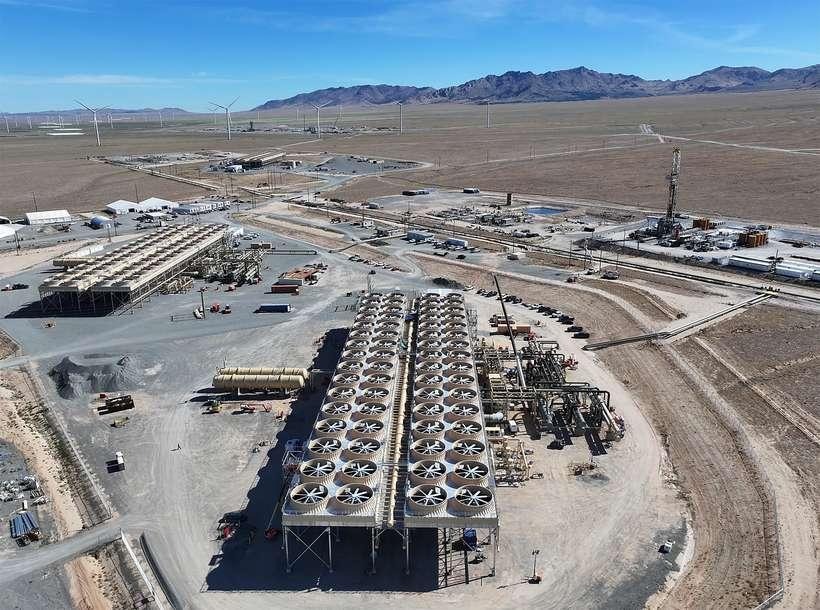
Fervo Energy’s Cape Station, Beaver County, Utah. Photo: IEEE Spectrum
On September 30, Fervo Energy’s Cape Station in Utah became the first enhanced geothermal plant anywhere to reach full commercial operation, delivering power to the grid day and night (Fervo Energy). Enhanced geothermal uses the horizontal drilling and fracturing techniques developed by the oil and gas industry, pointed at a different target: heat from hot, dry rock miles underground.
The first unit produces about 33 megawatts, enough for roughly 30,000 homes, and is already selling that power under contract. The first full phase, due to finish in early 2027, will reach about 100 megawatts, closer to 100,000 homes, with much more contracted beyond that.
A geothermal plant like this runs at a steady output around the clock, which makes it a strong complement to solar and wind. Until now, the technique had only been proven at pilot scale. A full commercial plant selling power on contract moves it from promising to real.
2. The hardest vehicles to electrify just crossed a line
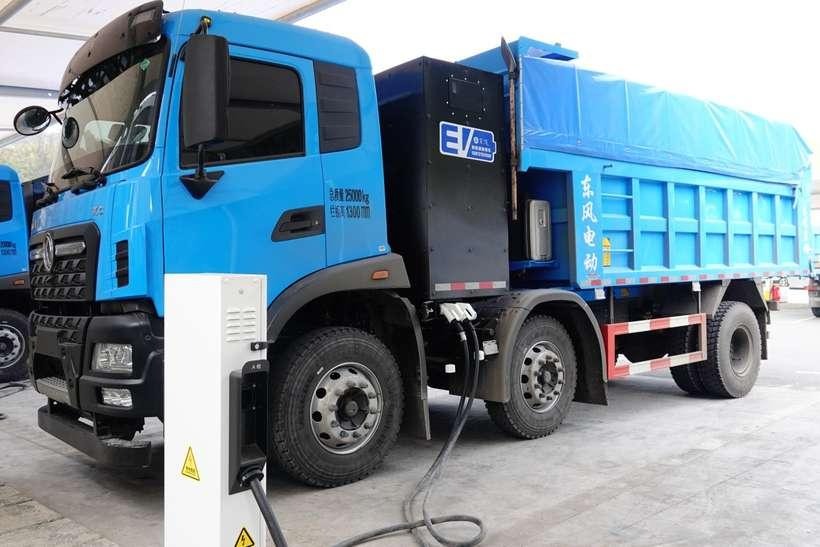
An electric heavy truck charging in China. Photo: South China Morning Post
Electric passenger cars are a familiar story by now. The harder problem has been the heavy stuff: long-haul trucks and city buses, with their enormous energy demands and unforgiving duty cycles.
This past December, for the first time, more of the heavy trucks sold in China in a single month ran on batteries than on diesel, nearly 54% of sales (industry data via Semafor). China is the world’s largest truck market, so where it goes, the global numbers tend to follow.
Worldwide, sales of electric trucks and buses nearly doubled last year, passing half a million vehicles for the first time (International Council on Clean Transportation), and 2026 is running ahead of that pace. In cities it is already visible: this summer London put its 3,000th zero-emission bus into service, about a third of its fleet (Transport for London).
Heavy trucks are a small share of the vehicles on the road but burn an outsized share of the diesel, so each one that goes electric counts for more than its number suggests.
3. The world built more batteries for the grid than ever before
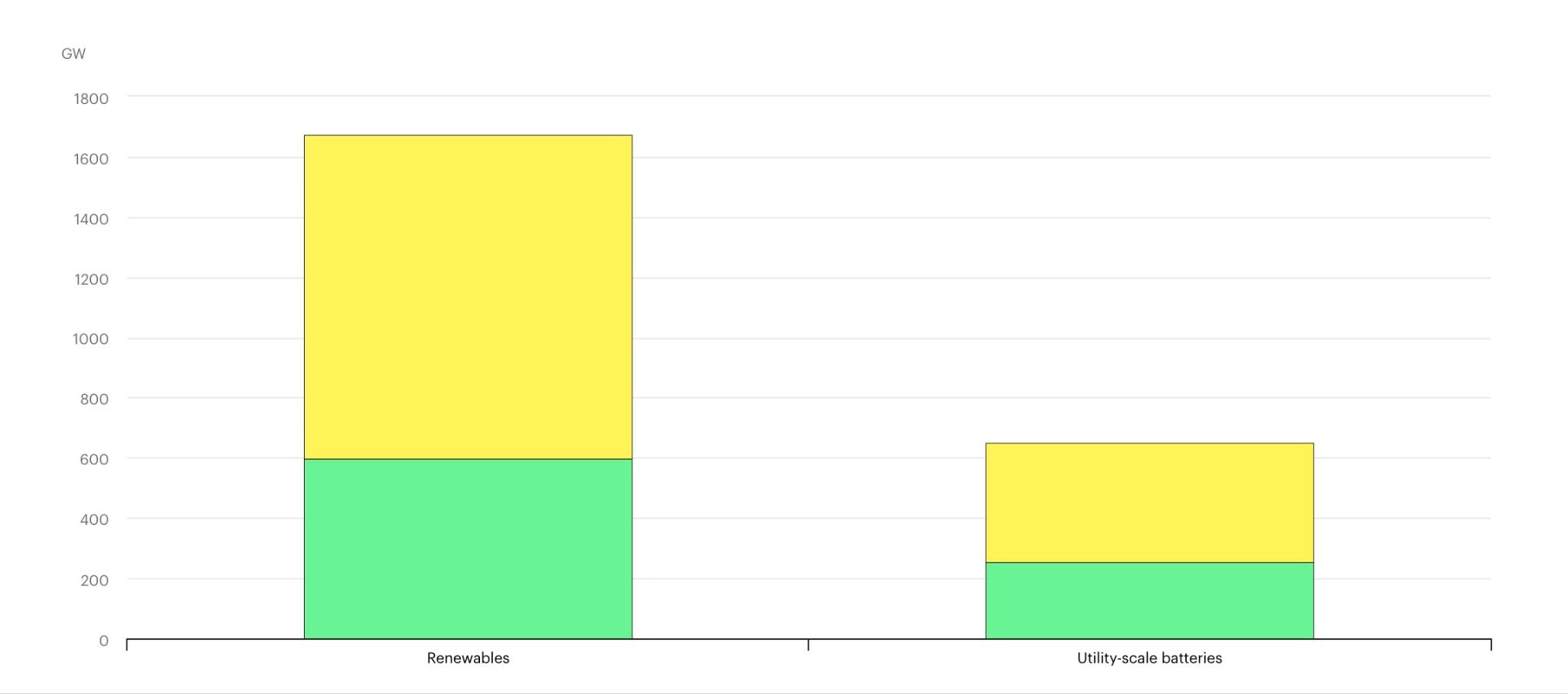
Renewables and utility-scale battery capacity. Chart: IEC
Over the past year the world brought online a record amount of grid battery storage, about 108 gigawatts’ worth, roughly 40% more than the year before (International Energy Agency). These are the large battery installations that store cheap solar power in the afternoon and feed it back in the evening, when demand peaks.
In the United States, developers are on track to add a record of around 24 gigawatts this year alone, up from about 15 the year before, with Texas accounting for roughly half (U.S. Energy Information Administration). Storage at that scale is what keeps the air conditioning running at eight in the evening on a grid that ran on sunshine at noon.
These systems have also grown far safer as they’ve scaled. The grid-battery fire rate has fallen about 98% since 2018, to a level the Electric Power Research Institute now rates as on par with the oil-filled transformers that have run the power system for a century (EPRI). Most new installations use lithium iron phosphate cells, a chemistry far harder to ignite than the lithium batteries in a phone or laptop.
Batteries generate no power of their own. They let the clean power already on the grid count around the clock, which is why this build-out matters as much as the panels and turbines behind it.
4. China’s emissions may finally be declining
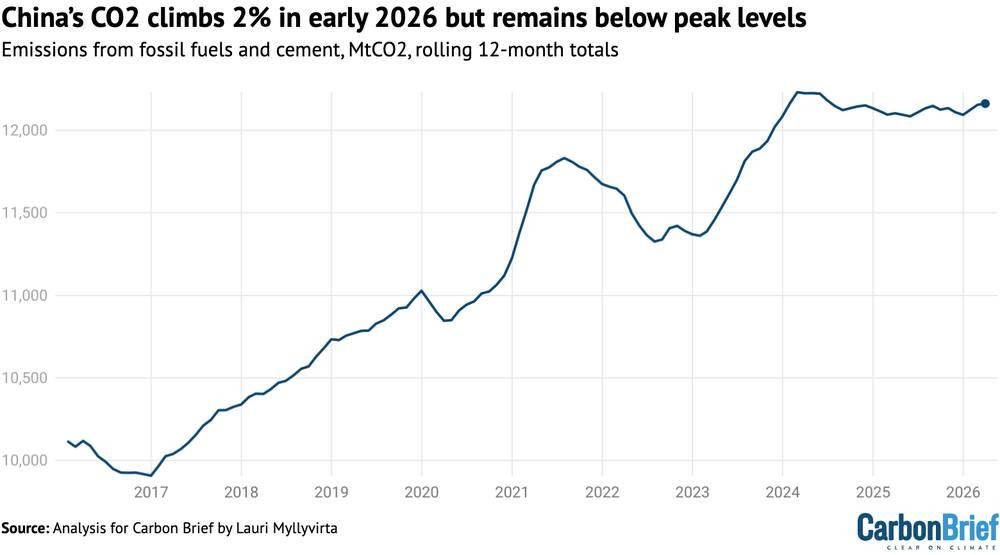
China’s CO2 emissions from fossil fuels and cement, rolling 12-month totals. Chart: Carbon Brief
China emits more carbon than any other country, so its direction matters more than almost any single number in climate.
In 2025, for the first time, clean energy rather than an economic slump pushed China’s emissions into reverse, and through 2026 they have stayed below their 2024 high (Carbon Brief / CREA). The country is now adding solar, wind, and electric vehicles faster than its energy demand is growing, which is what it takes to bend the line down while the economy keeps expanding.
It is too early to call 2024 a permanent peak. Emissions rose early in 2026 before falling again, and a dry year for hydropower could push them back up. But the long climb has, for now, stopped.
5. The open ocean can finally be protected

A school of fish over a reef.
Almost two-thirds of the ocean lies beyond any country’s borders. For most of history, no government had the authority to protect any of it.
This year the High Seas Treaty came into force, giving the world its first legal way to create protected areas in international waters (High Seas Alliance). More than 60 countries have ratified it, enough to make it binding, with more signing on.
About 1% of the high seas has any protection today, against a goal governments have set of safeguarding 30% of the ocean by 2030. The treaty is the mechanism to get there: a way to declare ocean sanctuaries the way countries already set aside parks and reserves on land. No sanctuary has been designated yet, but after two decades of negotiation, it is finally possible.
Closing thought
Five kinds of progress this month: a new source of around-the-clock clean power, the hardest part of transport starting to shift, record battery storage, the biggest emitter’s emissions leveling off, and the open ocean within reach of protection. All of it already measured and underway.
We’ll be back soon with the next round.